Tokyo
Technology Case Study
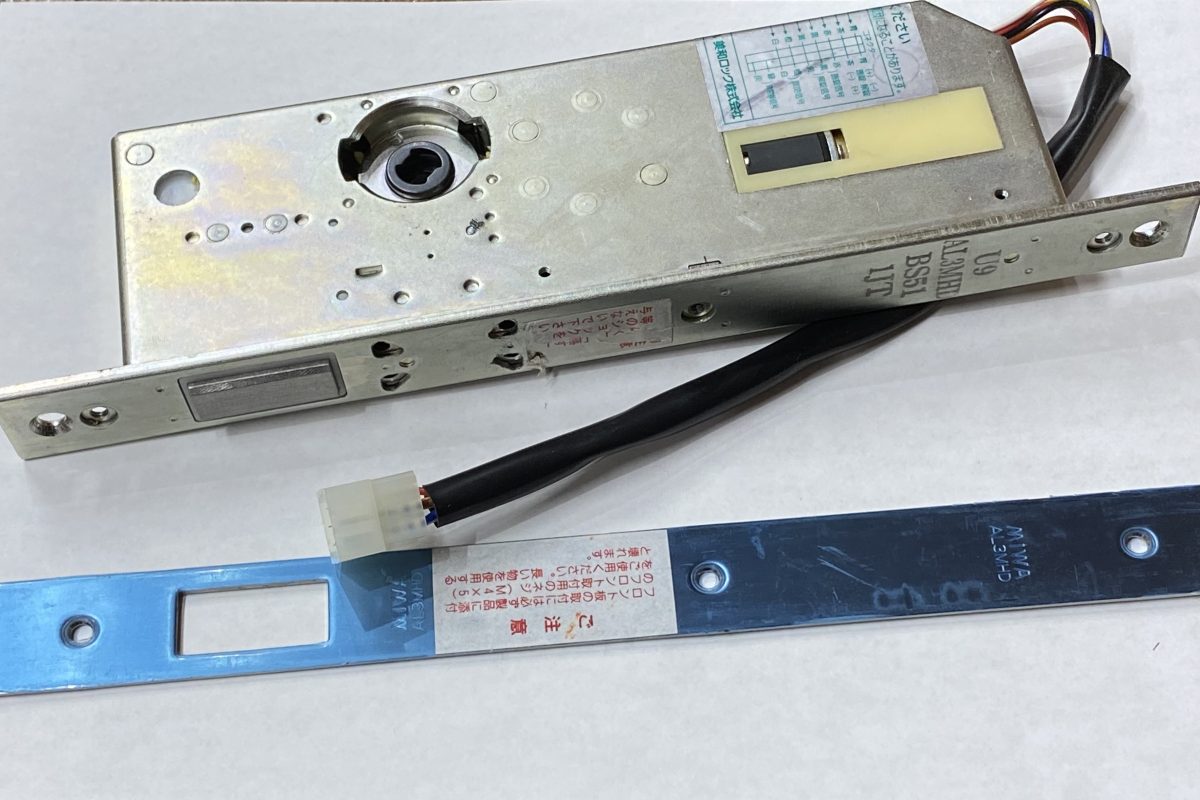
Electric locks and controls
The electrification trends coming to cars will have a transformative impact on society. These can be seen as the forefront of the IT trend that began in earnest 30 years ago, and social innovations such as MaaS and CASE are only accelerating. Even in jobs that, like ours, seem to have no connection to such things, the wave of telecommunications-related innovations is certainly coming. For example, the IoT trend is advancing rapidly, even for a single door, lock, or indoor air conditioning control. In our case, the IoT trend is definitely pushing forward to items that we provide as finished products, such as gates, functional gateposts, and doors, using ready-made products. The other day, I had an experience that made me keenly aware of this trend and the difficulty of responding to it.
Electric lock installation and metal product installation
We had a project to install an electric lock on a door that we worked on. Normally, a door is locked with a key and a handle, but in this case, it was an electric lock. Therefore, an electrical process was required. However, we did not have the know-how for electrical work, and this part of the project was basically handled by other contractors who were professionals in this field. In this project, it was difficult to communicate in this area, and we had to do the electrical grounding and the actual installation as well. Naturally, problems arose. Simply put, the electric lock did not work. What we keenly felt at this time was the difficulty in finding the cause.
Responsibility and Trust
As for the products used in this project, although mutual connection compatibility is theoretically guaranteed by a standard called the JEM-A (JEMA) standard, it was difficult to determine whether they would work well because we had no experience with them. Even when we inquired with each manufacturer to confirm actual product compatibility, it was difficult to get a clear answer because it is difficult to check compatibility with all products on a manufacturer-by-manufacturer basis. In the end, AICHI METAL, whose main business is not electrical work, had to bear the ultimate responsibility, which is another point we regret. However, from the customer's point of view, it is natural for them to outsource to us in terms of functions associated with doors. If we were to say that these projects would be zero or that we would not accept them in the future, we would lose the opportunity and challenge to adapt to the changing society. This has been a great gain for us. We are currently working on measures to address this electrical knowledge. I feel that the "metalworking industry," which is indispensable in an ever-changing society, is being questioned.